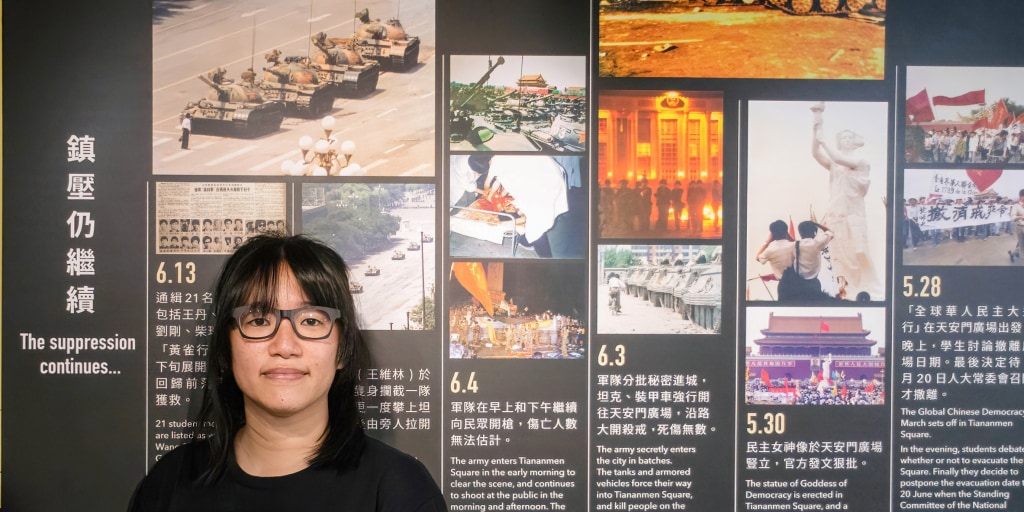
BREAKING NEWS Sep. 11, 2026, 2:29 AM UTC Hong Kong residents’ freedoms have significantly eroded since Beijing imposed a controversial 2020 national security law, used to jail a number of pro-democracy activists. Hong Kong activist Chow Hang-tung said her national security conviction “boils down to saying that pursuing democracy is a crime.” Alex Chan Tsz Yuk / SOPA Images/LightRocket via Getty Images file HONG KONG — Three pro-democracy activists in Hong Kong who organized annual vigils for victims of China ’s 1989 Tiananmen Square crackdown were sentenced to prison terms between five and over seven years Friday after being convicted under a national security law that critics say has stifled dissent in the Chinese territory. Lee Cheuk-yan was sentenced to seven years in prison, while Chow Hang-tung was sentenced to seven years and three months.
Both had pleaded not guilty to charges of inciting subversion under the Beijing-imposed law. A third defendant, Albert Ho, 74, was sentenced to five years and two months after pleading guilty, which can result in a shorter sentence. Both Lee and Chow, who have been in custody continuously since they were charged five years ago, had pleaded for reduced sentences after the verdict.
They had faced a maximum of 10 years in prison. All three were leaders of the Hong Kong Alliance in Support of Patriotic Democratic Movements of China, which for three decades held annual candlelight vigils in honor of those who were killed on June 4, 1989, in a Chinese military crackdown on pro-democracy protesters in and around Beijing’s Tiananmen Square. The vigils, which drew tens of thousands of people a year, were the only large-scale public commemoration on Chinese soil of the Tiananmen crackdown, discussion of which is heavily censored in mainland China.
The alliance was also convicted in the case. The trial, which began in January , was heard by three government-appointed judges who ruled last month that the alliance’s longtime call to “end one-party dictatorship” in China was an unlawful form of incitement to overthrow the country’s ruling Communist Party. Lee Cheuk-yan has been in custody continuously since he was charged under the national security law in 2021.
Tommy Walker / NurPhoto via Getty Images file The United States, along with many other Western governments and the United Nations, condemned the Aug. 21 verdict as a further sign of Hong Kong’s deteriorating freedom of expression. The Tiananmen vigils “sought only to remember the past and honor the lives lost in that assault,” Assistant Secretary of State Riley Barnes said in a post on X . During the trial, Lee, 69, a former lawmaker, told the court that the alliance was not calling to eliminate the Communist Party, but rather to allow the Chinese public to decide who governs them through free and fair elections.
The judges said the defendants were not being tried over their political views. Chow, 41, a barrister who represented herself in court, said in her mitigation statement that the 206-page verdict “boils down to saying that pursuing democracy is a crime.” “Believing that dictatorship is wrong and democracy is right — if that isn’t a belief, then what is?” she said. Chow added that she had “no regrets” about her activism, saying she “would rather be a criminal than a person who betrays their conscience.” Hong Kong, a former British colony, returned to Chinese rule in 1997 with the promise that its civil liberties would be preserved for at least 50 years.
But residents of the once-freewheeling city have seen their freedoms significantly eroded since Beijing imposed a controversial 2020 national security law, which has also been used to jail other pro-democracy activists such as former media tycoon Jimmy Lai . A candlelight vigil in Hong Kong’s Victoria Park on June 4, 2019, marking the 30th anniversary of the Tiananmen Square crackdown. Anthony Kwan / Getty Images file Legal concerns have led to the shutdown of dozens of civil society groups, including the alliance, which voted to disband in 2021.
In 2024, Hong Kong’s pro-Beijing leadership passed their own toughened national security legislation, known as Article 23 , which critics say has only further chilled expression. Hong Kong and central Chinese authorities say the laws were necessary to restore stability in the city after months of anti-government protests in 2019 that sometimes turned violent. They say the Tiananmen vigil organizers continued to engage in criminal acts after the 2020 law took effect and that freedom of speech should not be used as a “pretext” for unlawful activities.
The alliance “had long been deliberately planting seeds of hatred” against the Communist government and “inciting people to subvert state power,” John Lee , Hong Kong’s top leader, said after the verdict. The vigil was first banned in 2020 before the national security law took effect, with Hong Kong authorities citing Covid-19 restrictions. In more recent years, the former vigil site has been occupied around June 4 by a carnival organized by pro-Beijing groups.
Each year there is heavy police presence at the site around the anniversary, and some people have been detained after showing up with flowers or candles. The Tiananmen crackdown has also been erased from public view in Hong Kong in other ways, with local universities removing Tiananmen sculptures and other artwork that had stood on their campuses for years and officials forcibly closing the city’s June 4th Museum. Albert Ho was the only one of the three defendants to plead guilty.
Chan Long Hei / Bloomberg via Getty Images file The conviction of the Tiananmen vigil organizers “symbolizes the fall of the rule of law in Hong Kong,” said Eric Lai, a senior fellow with the Georgetown Center for Asian Law, citing the handpicked judges, the lack of a jury and the defendants’ extended time in custody. He said the alliance verdict and other national security convictions had created a “gray zone” not just for activists, but for everyday people in Hong Kong because “words and deeds that we thought were constitutionally acceptable and lawful in the past could be a crime now.” Other cases linked to the 2019 protests remain unresolved. Last week, prominent activist Joshua Wong , 29, who is already serving a prison term of four years and eight months in a separate case , pleaded guilty to conspiracy to collude with foreign forces to endanger national security in a second prosecution against him.
As of March, 386 people had been arrested under the Beijing and Hong Kong national security laws, with 176 people and four companies convicted, Reuters reported, citing the local Security Bureau. Some were arrested over social media posts whose criticism of the government was alleged to be seditious. Last week, national security police said they had arrested two men and one woman accused of “shouting seditious slogans” as they marked the Aug. 31 anniversary of a 2019 incident at a metro station during which Hong Kong police were accused of beating protesters, which they denied.
If the three arrested people are charged, they could face up to seven years in prison.
Source: NBC News